
Contents
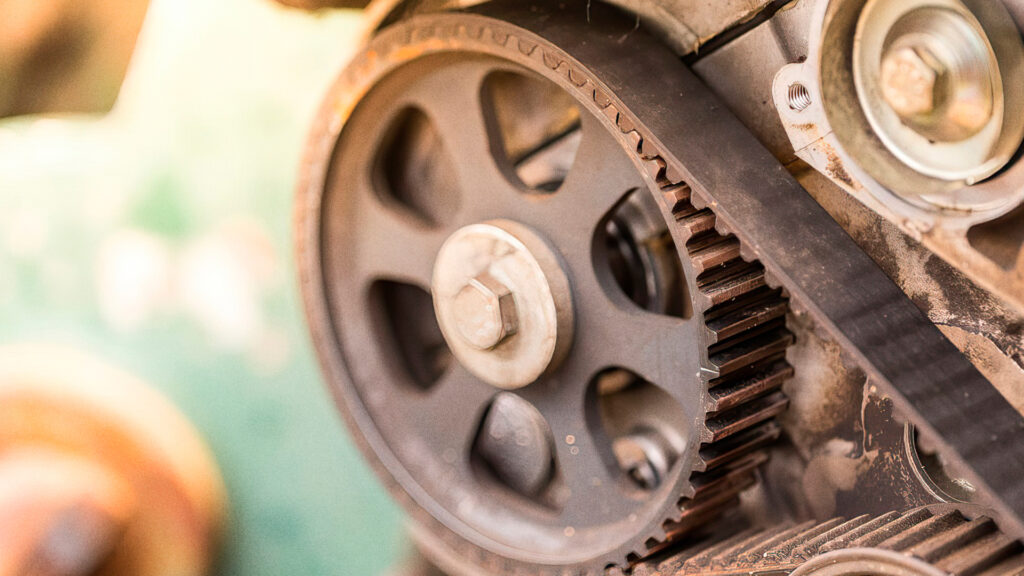
Of all the components under the hood, the timing belt is one thing we absolutely must maintain. A break is something we must avoid at all costs, because if it breaks, our engine will suffer so much damage that sometimes the most sensible thing to do is to send the car to the junkyard.
Timing belts have a limited lifespan. They must be replaced after a certain number of kilometers—some manufacturers also recommend replacing them after a certain number of years, regardless of mileage. In any case, it’s important to know that the belt can deteriorate even sooner than expected. That’s why it’s crucial to identify a problem with this component early on and take the car to a repair shop as soon as possible to prevent the belt from breaking.
In this article, we’ll list the most obvious signs that your timing belt is damaged or about to break. Pay close attention and take notes if necessary. If, after reading this article, you’re certain your belt is starting to fail, don’t put off taking it to a mechanic. Let’s get started.
Engine Failure – Timing Misalignment

The main function of the timing belt is to maintain cylinder synchronization. If the belt starts to malfunction, the cylinders can lose their synchronization, causing engine failure.
Another sign is a decrease in the car’s performance, which is a major warning sign. This should not be ignored, as it means the engine could be sustaining damage.
“Ticking” Sound in the Engine

The timing belt is connected to the crankshaft pulleys. If the belt material begins to wear out, it won’t be able to turn the pulleys properly, causing a ticking sound. However, this noise can also be caused by low oil levels in the engine. In both cases, this is a serious issue, so it’s important to have a mechanic inspect it.
Oil Leaks

The timing belt is secured by a series of nuts. However, over time, these can become loose. When this happens, it can cause an oil leak around the timing belt cover.
This can lead to a serious problem. When the oil flow is interrupted, there is a high risk that the engine will overheat. If this happens, it can cause significant damage, and the repair bill will increase significantly.
More Smoke Than Usual

If you notice more smoke coming out of the exhaust than there should be, you may be making the engine work harder than usual. However, it’s also possible that there are fluid leaks and the engine is burning oil, for one reason or another.
If your vehicle is smoking more than usual, you should take a close look at it. Whether or not the problem is related to the timing belt, it’s best to fix it before the repair bill gets too high.
Erratic increase in engine RPM

This will be easier to spot in vehicles with a manual transmission. It can also be observed in cars with automatic transmissions, but it won’t be as easy to spot in modern models that don’t display RPM on the dashboard.
Well, if you can see your vehicle’s engine RPM, you can diagnose that something is wrong with the belt if the RPM fluctuates erratically. As a general rule, the RPMs rise when you accelerate, and the needle drops when you take your foot off the gas pedal. If it jumps around or behaves strangely, it could mean that the belt is doing its job erratically. For example, some teeth may have come off, causing the needle to fluctuate.
Difficulty or Inability to Start the Engine

If your car has serious trouble starting, one possible cause could be the timing belt. However, there are many other, far more likely problems that could be to blame.
In any case, if you’ve checked off the other items on this list and your car still won’t start at all, you might not even be able to turn the ignition key. A clear sign that something is wrong is when you can’t get the engine to start. If this happens, it could be a clue that the timing belt has completely snapped. You should hear the starter motor running, but since the belt controls the crankshaft, the car won’t start.
“Check Engine” light on

This doesn’t happen in every car, but many models can automatically detect that the belt is in poor condition. That’s why the “Check Engine” light may come on.
There’s no need to panic in this case because the engine malfunction light is usually very sensitive and is triggered by almost any engine issue. However, this light should never be ignored, so you should take the car to a mechanic as soon as possible.
More than 100,000 kilometers or 5 years without replacing the belt

Every engine has its own replacement intervals. Some belts last for hundreds of thousands of kilometers, while others—such as oil-soaked belts—may need to be replaced even sooner than the manufacturer recommends. It’s a good idea to keep a record of when the belt was replaced (mileage and date) so you never miss maintenance on this component. If it’s been more than 100,000 kilometers since you last visited a repair shop to replace the belt, you should start to be suspicious. Either it’s due very soon, or you’ve already exceeded the safety period and are taking a risk.
In addition, it’s also recommended to replace the belt every 5 or 6 years even if the mileage hasn’t been reached, to ensure that the materials don’t degrade due to external factors such as humidity, temperature changes, or erosion. You should never go more than 10 consecutive years without performing this maintenance, regardless of the mileage.
In conclusion, we can say that the timing belt doesn’t give as precise a warning as the timing chain. The belt wears out with use because it operates under constant friction. It’s subjected to high temperatures and can crack over time. Although maintenance is quite expensive, it’s better to be safe than sorry. The last thing you want is to experience what happens when a timing belt breaks.