
Contents
The internal combustion engine has evolved tremendously up to the present day. Currently, engineers work tirelessly in factories to minimize the environmental impact of engines, and that would not be possible without something as complex and functional as variable valve timing.
In the past, a car's intake and exhaust valves opened at a specific moment during the four-stroke cycle and for a set duration. Today, modern engines can control not only when the valves open, but also how far they open and for how long. Our goal with this article is to help you understand how Variable Valve Timing (VVT) works, what it is used for, and what the best-known systems are.
Engines Before Variable Valve Timing

To understand how VVT systems work, we have to take a brief trip into the past. In older engines without variable valve timing, the opening and closing system for the intake and exhaust valves was much simpler than in today's powerplants. The valves opened and closed by a specific amount, at a specific moment in the four-stroke cycle, and for a fixed duration. These parameters were set in stone and did not adjust according to engine conditions or performance demands.
In these engines, the camshaft lobes were responsible for opening and closing the valves. Cams are lobe-shaped metal pieces that, as they rotate, push against cam followers or rocker arms, opening the intake and exhaust valves. Once the cam lobe passed, a spring closed the valve. The camshaft was connected to the crankshaft via timing belts, chains, or gears.
Because these engines followed the four-stroke cycle, the camshaft rotated once for every two rotations of the crankshaft. The valve opening and closing times were predetermined and did not change based on the engine's operating conditions.
Although older engines without variable valve timing were simpler and reliable, they had several drawbacks. Engine performance was limited by the cam profile and the fixed relationship between the camshaft and the crankshaft. This meant the engine could not adapt to different load conditions or speeds, resulting in lower efficiency and flexibility compared to modern engines equipped with variable valve timing.
The Transition Toward Variable Valve Timing
In the 1960s, automakers began developing variable valve timing systems that allowed the intake and exhaust valves to open earlier or later in a four-stroke cycle. The goal was to improve volumetric efficiency, reduce NOx emissions, decrease pumping losses, and save fuel.
How Does Variable Valve Timing Work?

Variable Valve Timing (VVT) is an engine technology that makes it possible to modify the opening and closing timing, lift, and duration of the intake and exhaust valves. This allows engines to adapt to different load conditions, speeds, and performance demands, improving efficiency, power, and pollutant gas emissions.
There are several VVT systems, but the two main types are Cam Phasing and Cam Changing.
Cam Phasing
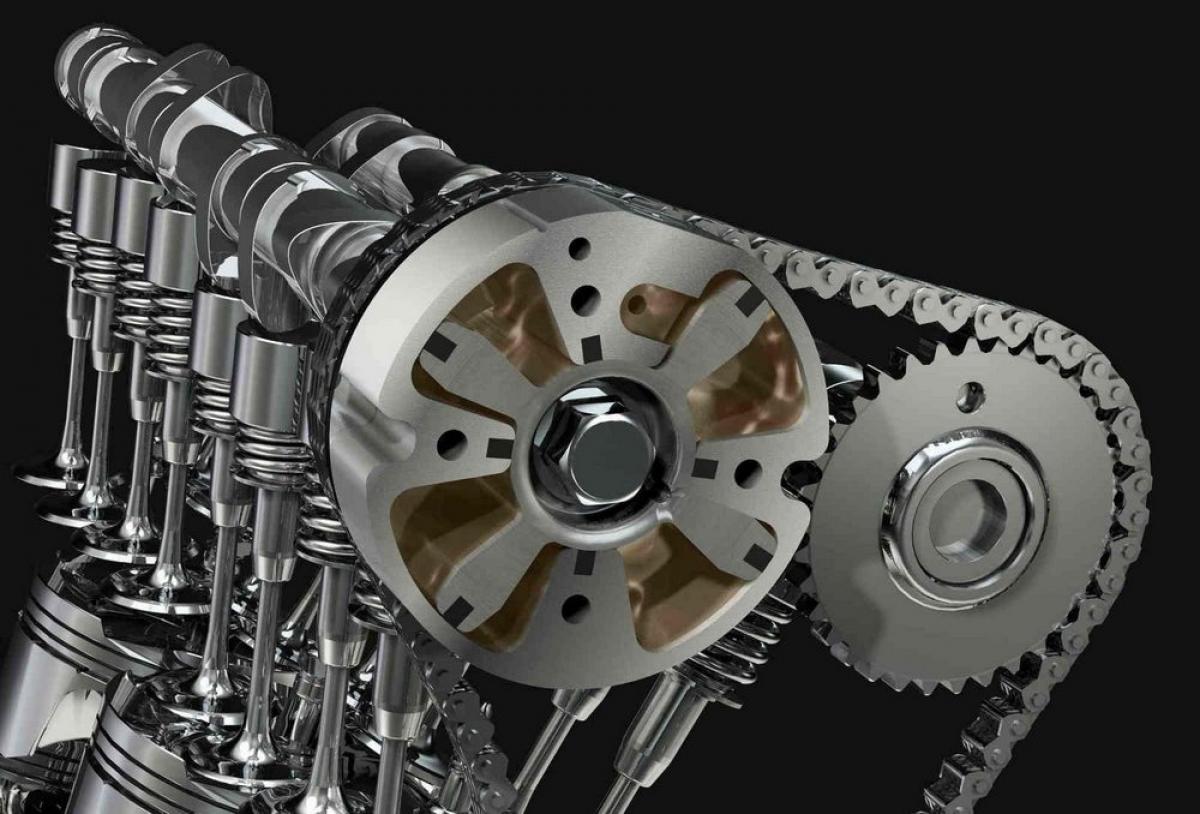
Cam Phasing adjusts the opening and closing timing of the valves by rotating the camshaft in relation to the crankshaft. An actuator, generally controlled by the Engine Control Unit (ECU), modifies the phase angle of the camshaft based on the engine's operating conditions. By changing the phase angle, engine torque at high revolutions per minute (RPM) or power at low RPM can be improved.
Some examples of this system include Toyota's VVT-i and Honda's VTC.
Cam Changing
Cam Changing adjusts valve lift and duration by switching the cam profile on the camshaft. This is achieved through an actuator that selects a different cam lobe depending on engine conditions. Changing the cam profile affects not only how far the valve opens (lift), but also how long it stays open (duration).
A famous example of a cam-changing system is Honda's VTEC, which uses a set of rocker arms and hydraulic pins to switch between low-speed and high-speed cam profiles.
Modern VVT systems use a wide variety of sensors—such as camshaft and crankshaft position sensors, oil temperature sensors, and mass airflow sensors—to monitor engine operation and optimally adjust valve timing, lift, and duration. This enables modern engines to deliver superior performance and efficiency compared to older engines without variable valve timing.
The Best-Known Variable Valve Timing Systems Today
If you want to know how a specific system works, below you will find several guides covering the best-known valve timing systems in existence: