
Contents
How Toyota's VVT-i Valve Timing System Works
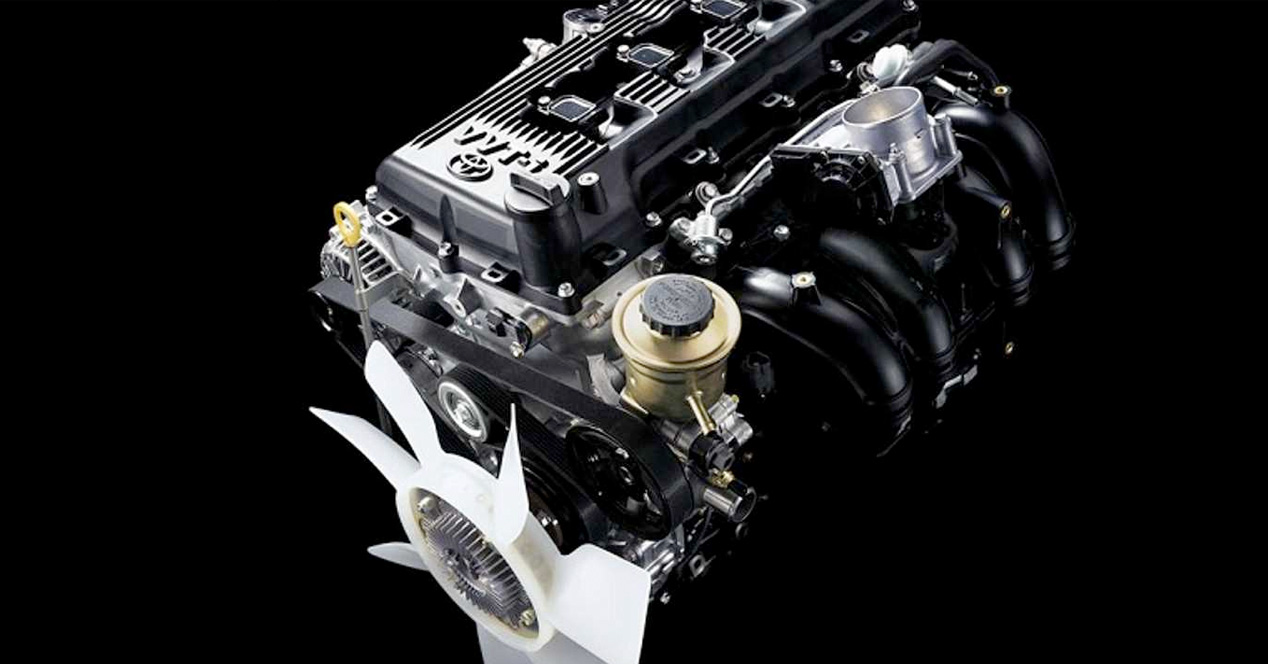
Toyota's Variable Valve Timing with intelligence (VVT-i) was introduced in 1996 to improve upon the valve timing system that had been in use since 1991. VVT-i performs hydraulic cam phasing in two stages and can vary between an open intake valve or a closed exhaust valve depending on the resistance that needs to be overcome at any given moment during the car's engine cycle.
In this way, the VVT-i system helps maintain efficiency by allowing more air into each cylinder during combustion, since it does not wait for one piston to fully expand before another begins moving toward its top position. Through this process, greater efficiency is extracted from every liter of fuel consumed compared to standard VVT.
What Are the Differences Between VVT and VVT-i?
Toyota's VVT-i valve timing system has additional functions that improve performance and fuel economy, such as varying the valves based on piston position. Additionally, it can vary the opening and closing angle to improve engine startup—that is, advancing or retarding the on/off timing, smoothing out power peaks, or even eliminating noise.
The VVT-i valve timing system is also characterized by the use of stepped cams instead of the single cam profile used in the standard VVT system. This allows for better energy utilization and smoother, less abrupt engine operation.
Variants of VVT-i Technology
VVTL-i

The first evolution of VVT-i technology arrived a couple of years later. In 1998, Toyota launched an improved version of this valve timing system, called VVTL-i (Variable Valve Timing and Lift-intelligent). Its operation is inspired by the human body, specifically by the training athletes do to improve their capacity to inhale and exhale as much air as possible so that more oxygen enters their lungs and, consequently, their muscles.
This version was introduced by Toyota for the first time in the 2ZZ-GE engine. Its magic lies in its ability to alter both valve lift and the duration of valve opening. It works using two lobes per cylinder: a low-RPM lobe and a high-RPM lobe.

When the car's engine revs at high speed—that is, at approximately 6,000 RPM—the electronic control unit (ECU) uses an oil pressure switch to open all four intake valves located above each cylinder to increase the volume of fresh air entering the cylinder. Likewise, the expulsion of combustion gases is also electronically controlled.
When the engine is operating below 6,000 RPM, the low lobe actuates the rocker arm shaft and thus the valves. In this way, engine efficiency is maximized.
Dual VVT-i
Similar to VVT-i, Dual VVT-i adds exhaust camshaft control to the intake valve control of standard VVT-i. It was first introduced in the Japanese brand's V6 engines, debuting in the 2GR-FE powerplant in 2005. Subsequently, Dual VVT-i made its way into the rest of the Toyota and Lexus engine families: LR, UR, GR, AR, and ZR.
This system offers several advantages over the traditional VVT-i system, such as faster catalytic converter warm-up through exhaust gas control, the ability to minimize compression to improve idle fuel economy, and enhanced timing flexibility thanks to the added control over exhaust gas timing.
VVT-iE

This variant stands for "Variable Valve Timing-intelligent by Electric motor." Its operation is identical to Dual VVT-i, with the exception that an electrically operated actuator adjusts the intake camshaft timing instead of using hydraulic pressure to do so. The exhaust side remains hydraulically controlled. This process is used in the Lexus 1UR engine lineup. The actuator motor runs at the same speed as the camshaft and adjusts faster or slower to change the lift timing. This allows for more precise and immediate control over lift timing and duration, though it is more expensive to implement.
Valvematic

Valvematic technology was born in 2007 as an evolution of the Dual VVT-i system. It is an innovative Toyota technology that incorporates an intermediate camshaft controlled by a servomotor. The system allows valve opening to be greater and last longer when more efficient combustion is required. When this second camshaft is not needed, the lobes on this secondary shaft remain stationary and only the main camshaft operates, regulating the timing in the traditional way.
The intermediate shaft in the Valvematic system has multiple positions, meaning valve opening can be regulated regardless of the engine's RPM. Thanks to this, power is maximized by up to 20% while emissions are simultaneously reduced by approximately 25%.
VVT-i vs. VANOS vs. VTEC: Which Is Better?

During the 1990s, fuel concerns and the tightening of anti-pollution standards and regulations forced engine manufacturers to research the field of variable valve timing. Thus, systems like BMW's VANOS and Honda's VTEC, among many others, were also born. The goal of all these systems is the same, but their operation differs in how valve management takes place.
The VVT-i system is simple, as it merely varies the advance angle of the intake valve according to engine load. This gives the system several advantages, the most obvious being durability and reliability.

On the other hand, Honda's VTEC valve timing is even simpler, having been designed in an incredibly ingenious way. In terms of reliability and precision, we could say it ties with VVT-i, although Honda's system is capable of squeezing more power and torque out of its engines than Toyota thanks to the design of its technology.
Finally, BMW's VANOS uses a complex system of gears that modify the advance angle of the intake and exhaust valves based on crankshaft position. Its performance benefits are incredible, though it should be noted that it is not as bulletproof a system as those from the Japanese manufacturers.