

Contents
- Optimal Engine Operating Temperature
- What temperature does a gasoline engine run at?
- What is the normal temperature for a diesel engine?
- What temperature is considered normal in a rotary engine?
- Why Is My Engine Overheating? Common Causes of High Engine Temperature
- Cooling System Issues
- Thermostat Failure
- Clogged or Dirty Radiator
- Cooling Fan Issues
- Should the Engine Temperature Gauge Always Sit in the Middle?
Monitoring the engine temperature of your vehicle is crucial for maximizing its lifespan and catching mechanical issues early. Regardless of whether you drive a brand-new car or one with quite a few years under its belt, your instrument cluster will feature a temperature gauge. Whether it is an analog dial with a needle or integrated into a digital HUD, it is more than enough to tell you if your powerplant is operating properly.
Optimal Engine Operating Temperature

What temperature does an engine run at?
You have probably heard that you shouldn’t rev a car hard when the engine is still cold. That is completely true, because many internal moving engine components can be damaged if they experience sudden thermal shock. You may have accidentally cracked a drinking glass by pulling it straight out of a hot dishwasher and filling it with ice—or shattered cold glass by exposing it to direct heat. The exact same principle applies to internal combustion engines.
What temperature does a gasoline engine run at?
On most instrument clusters, whether analog or digital, the minimum temperature displayed is 70 °C (158 °F), and the maximum usually tops out at 130 °C (266 °F). Once the vehicle is fully warmed up, the engine should sit at a temperature between roughly 90 and 105 °C (194 and 221 °F). Of course, this varies depending on the engine architecture, fuel type, and displacement. Likewise, a gasoline engine acting as a generator in a range-extended electric vehicle (EREV) or a hybrid does not operate under the same conditions as a standalone gasoline vehicle. In hybrids, the combustion engine typically runs within a very narrow, steady load range without sharp spikes, meaning its operating temperature, fuel consumption, and power output remain highly stable.
What is the normal temperature for a diesel engine?

On the other hand, some engines have different thermal characteristics. Diesel engines require preheating via glow plugs before starting in cold conditions (which is why a warning indicator illuminates on the dashboard when you first turn the ignition key). However, once up and running, they should operate at a temperature between 80 and 90 °C (176 and 194 °F).
The maximum safe temperature for a diesel engine is around 105 °C (221 °F). In other words, if you see the needle climb past that mark, it is time to start worrying.
What temperature is considered normal in a rotary engine?
Rotary engines (Wankel engines), such as the one in the Mazda RX-8, are extremely sensitive to sudden thermal fluctuations, and you should only demand high power output once they are fully up to operating temperature. That said, this rule of thumb also applies to any high-displacement performance car, whether it runs a rotary engine or a conventional four-stroke piston engine.
The normal operating temperature of a rotary engine generally sits between 85 °C and 95 °C (185 °F and 203 °F). However, the engine bay itself can reach much higher ambient temperatures. A robust cooling system and strict temperature monitoring are even more critical in this type of engine.
Why Is My Engine Overheating? Common Causes of High Engine Temperature
Cooling System Issues
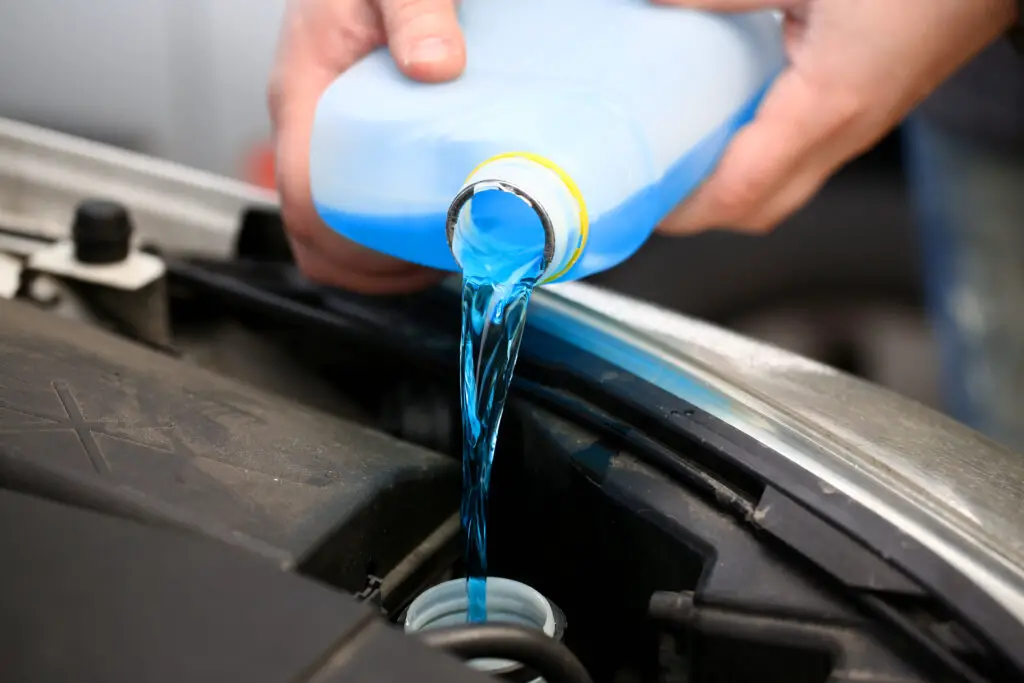
Overheating can be caused by something as simple as a low coolant level—a fairly common issue that modern vehicles usually warn you about—or a more serious problem like a leak in the cooling system.
As a general rule, cooling system leaks occur at the joints and connections between components, such as radiator hoses, radiator necks, the radiator core itself, expansion tank caps, or, in the worst-case scenario, a blown head gasket or cracked cylinder head. If an engine overheating warning pops up while you are driving, you must be extremely careful: pull over safely and wait at least 15 to 20 minutes before touching the coolant expansion tank cap. The pressurized coolant is often boiling, so opening the cap while hot will cause scalding fluid and steam to erupt, posing a severe burn hazard.
Thermostat Failure

Your vehicle’s thermostat regulates the flow of coolant between the radiator and the engine block. A failing thermostat can trigger several symptoms related to abnormal engine temperatures and overall performance.
A malfunctioning thermostat often causes erratic temperature spikes because the valve sticks open or closed randomly, preventing coolant from circulating properly through the cooling passages. Depending on whether it sticks shut or open, this can result in either a severely overheating engine or an engine that never reaches its optimal operating temperature.
Clogged or Dirty Radiator

Dust, road debris, sand, rust flakes, dead bugs, and other contaminants can clog the external cooling fins of your radiator and significantly reduce its ability to dissipate heat. Sludge and scale buildup can also accumulate inside the internal coolant passages, in which case the radiator should be removed and flushed by a professional if you aren’t experienced with cooling system overhauls.
Cooling Fan Issues

Cooling fans fitted to internal combustion engines can lose efficiency over the years. On older vehicles with mechanical viscous fan clutches, the fan can lose up to half of its airflow capacity or fail altogether. To prevent this, it is good practice to replace the fan clutch whenever you replace the water pump, as the service life of these two components is roughly identical.
Similarly, a mechanical cooling fan may stop spinning altogether if the serpentine belt (accessory drive belt) driven by the crankshaft snaps. This accessory belt is separate from the timing belt, and your car will have one regardless of whether its valvetrain is driven by a timing chain or a timing belt. In modern vehicles, radiator fans are almost exclusively electrically driven. If your older car still uses a belt-driven mechanical fan running off the crankshaft pulley, upgrading to an electric fan conversion kit can be a smart way to improve reliability and free up parasitic horsepower.
Should the Engine Temperature Gauge Always Sit in the Middle?

If your temperature gauge shows 100 °C at the center mark, the needle should sit slightly below the middle
As a general rule, the temperature gauge needle settles right around the middle of the dial once the engine has reached its normal operating temperature. This indicates that the cooling system is doing its job and the engine is running within its optimal thermal window. Keep in mind, however, that this dead-center reading typically applies to instrument clusters calibrated with 90 °C (194 °F) at the center mark.
Keeping the engine within this temperature window is essential to prevent overheating, which can cause catastrophic engine damage and costly repairs. A balanced operating temperature ensures effective oil lubrication, proper thermal expansion of internal metal clearances, and efficient fuel combustion—all factors that minimize mechanical wear and optimize engine performance.
If the temperature needle creeps past the center mark toward the hot zone, you need to act fast. A rising gauge can point