
Contents
- What Is a Water Pump and What Does It Do?
- Water Pump Maintenance. How Often Should It Be Replaced?
- How to Tell If My Car’s Water Pump Is Starting to Fail
- Coolant Leak on the Hood Floor
- Excessive Engine Overheating
- Whistling Noises Coming from Under the Hood
- The radiator or coolant reservoir is emitting steam
- What should I do if I have any of these problems?
It is often said that the water pump should always be replaced whenever the coolant is flushed from the car. Like many other components that are essential to the proper functioning of an internal combustion engine, the water pump is a wear-and-tear part. It does not last forever.
In this article, we’ll take an in-depth look at this system, its operation, maintenance, and how to detect problems early on.
What Is a Water Pump and What Does It Do?

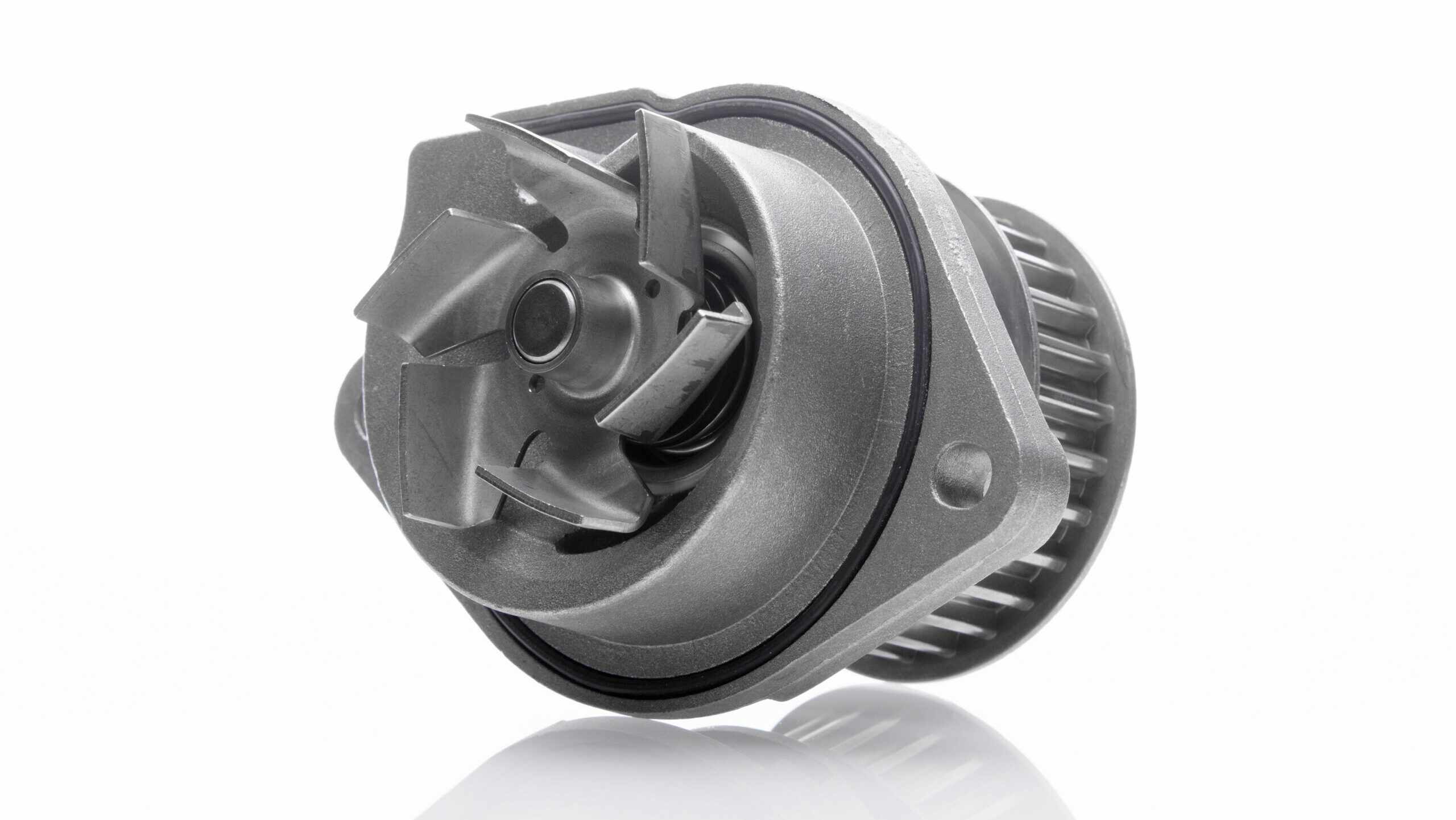
The water pump is a standard component in all vehicles with internal combustion engines. The water pump is responsible for preventing the engine from overheating. To do this, it uses the cooling system, which consists of a radiator that draws in cool air to lower the temperature of the coolant circulating through the system and driven by the pump. The constant flow of coolant helps cool the engine block.
If the pump or any component of the cooling system begins to fail, the car will likely display a warning about engine overheating (via the on-board computer or a gauge on the dashboard). In other cases, the engine will simply shut off.
Water Pump Maintenance. How Often Should It Be Replaced?

The water pump is a component that requires maintenance to ensure proper operation. Since it is a mechanical part, it is subject to wear and tear. Typically, in vehicles with a timing belt, the pump is usually replaced during the process of replacing the timing belt or timing chain. The pump itself is a fairly inexpensive part. Given the high cost of labor and the fact that both the belt and the pump are related components, both are usually replaced during the same service.
- Therefore, if your vehicle uses a timing belt, take advantage of the opportunity to replace the belt during each belt maintenance service. Many manufacturers sell very affordable belt-and-water-pump kits. Talk to your trusted mechanic about having this two-part service performed to be on the safe side and avoid future problems.
- If, on the other hand, your car uses a timing chain or you simply don’t want to replace the water pump along with the belt, depending on your make, the water pump has an average service life of approximately 5 years or 120,000 kilometers. In some premium models, the lifespan can be up to twice as long, but you should check with your manufacturer.
How to Tell If My Car’s Water Pump Is Starting to Fail
When the water pump begins to fail, it gives off a few warning signs that you shouldn’t ignore. They are as follows:
Coolant Leak on the Hood Floor
If you find traces of coolant on the floor of the hood or beneath where your car has been parked, the cooling system may have a leak. The water pump is connected to the rest of the system via fittings and seals. Some fittings can expand or contract due to weather conditions or engine compartment temperature, causing them to degrade and break the seal. When this seal breaks, coolant escapes from the closed circuit, staining the car’s engine compartment or the ground.
If you notice a green, pink, or light blue liquid (depending on the coolant you use) dripping from the front of your car, it may be a leak in this system, and the water pump should be inspected as soon as possible.
Excessive Engine Overheating

Along with fluid leaks, this symptom is by far the most common. As we explained at the beginning of this guide, the cooling system keeps the engine temperature in check. If it fails, it’s only natural that the engine will start to overheat significantly.
If your engine hits the red zone very easily or you receive a warning about excessive engine temperature, your car’s cooling system may have problems. It’s important to address this issue as soon as possible, since the engine can be damaged if heat isn’t dissipated properly.
Whistling Noises Coming from Under the Hood
When our car starts making strange noises, we know for certain that it’s not a good sign. If we hear a high-pitched sound coming from the engine, it’s most likely that the water pump drive belt is loose. In other cases, it’s simply due to the bearings, which become loose due to wear and tear.
Whether it’s one thing or the other, we should consult an expert to have this problem checked if we don’t have sufficient knowledge in this area.
The radiator or coolant reservoir is emitting steam

If your car is emitting steam, it usually gives you advance warning through an engine temperature alert. If steam is coming out of the radiator, you should pull over as soon as possible and turn off the engine to prevent structural damage. If you don’t, there’s a high chance that your engine block will crack, a valve will break, or—most commonly—the cylinder head will be damaged (commonly known as a “cylinder head blowout,” which is expensive to repair).
When the car is emitting steam from the radiator, it will also do so—and with great force—if you remove the coolant reservoir cap. Keep this in mind to avoid getting burned, and wait several minutes with the car already turned off before opening the cap, since the water will come out boiling if you don’t take the necessary precautions.
What should I do if I have any of these problems?

First of all, if you don’t have much technical knowledge and don’t want to complicate things, see a professional. In this guide we put together, we recommend the steps you should follow to find a quality mechanic in your town or city.
If you like a challenge and want to explore on your own, you’ll need to inspect the entire cooling system. Make sure the fittings are properly sealed, that the system has no leaks, and that the radiator isn’t corroded. Similarly, you should replace the water pump with a new one. In addition, you’ll need to check other components adjacent to the cooling system, such as the timing belt or chain, the pulleys, the tensioners, and other moving parts that may be causing problems with the proper functioning of your engine.