
Contents
- What is a supercharger, and how can it improve an engine’s power?
- How many horsepower do you gain with a supercharger?
- Can a supercharger damage my engine?
- How much does the supercharger weigh the vehicle down? How much power is lost in the process?
- How much pressure does a supercharger add?
- Is a supercharger or a turbo better?
There are various ways to boost an internal combustion engine. Beyond remapping the engine itself, one solution many manufacturers use is installing a turbocharger or a supercharger. The former is commonplace; virtually all new cars on the market come equipped with one. However, the supercharger is not as well known.
What is a supercharger, and how can it improve an engine’s power?

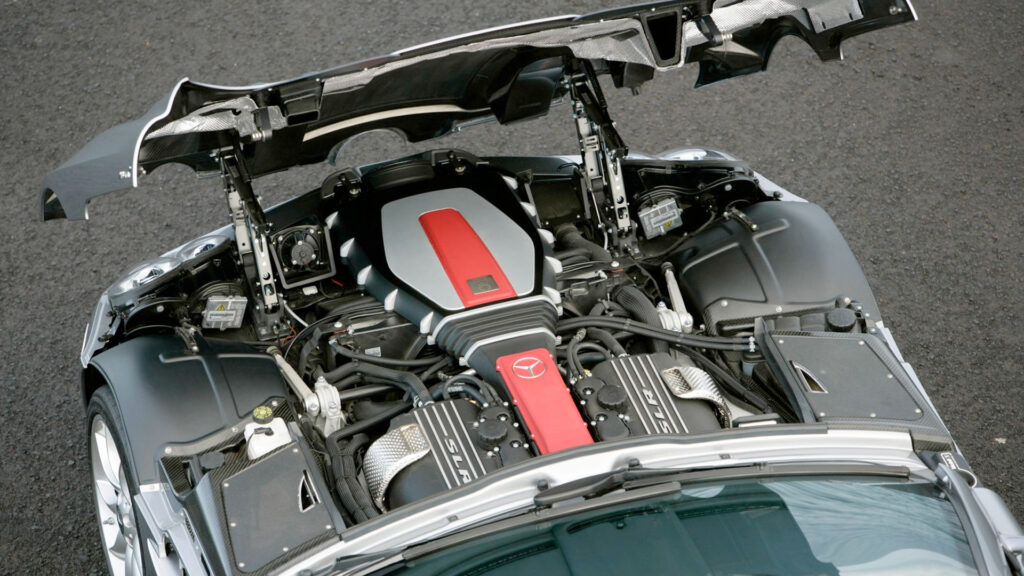
A supercharger, also known as a forced-induction system, is a compressor installed in an internal combustion engine. Its sole purpose is to force more air into the cylinders, which results in greater specific power.
The energy required to operate the supercharger comes from the engine itself. However, its operation differs from that of a turbocharger. In this case, the compressor is driven mechanically by belts, chains, or shafts connected to the crankshaft of the engine itself.
In the case of a centrifugal supercharger, this energy spins a rotor with blades that forces pressurized air into the engine. This process provides more oxygen to each intake cycle of the engine, allowing it to burn more fuel and perform more work, thereby increasing the engine’s power. Although the supercharger consumes some of the engine’s power, the resulting power gain is greater.
How many horsepower do you gain with a supercharger?

The amount of horsepower you can gain from a supercharger varies depending on several factors, including the type of engine, the type of supercharger, and how the system is installed and tuned.
Most manufacturers that install these components estimate that superchargers provide a power increase of between 30 and 50 percent compared to the car’s original output. Therefore, a naturally aspirated engine producing 150 CV could see its power increase to between 195 and 225 CV in the best-case scenario.
Can a supercharger damage my engine?
Installing a supercharger is a major engine modification that can have implications for engine durability, fuel economy, and other aspects of vehicle performance.
This is, to some extent, obvious. Engines break down due to friction. A supercharged engine will undergo a greater number of cycles, while also potentially increasing its operating temperature significantly. An overheated engine is never good news. In many cases, installing this component will also require additional modifications, such as an improved cooling system, to handle the extra heat.
How much does the supercharger weigh the vehicle down? How much power is lost in the process?
The supercharger’s weakness is that it needs to draw some of the engine’s power to generate more power. This shouldn’t concern us at all, since in many vehicles, there’s a discrepancy between the power and torque generated by the engine and what’s ultimately transmitted to the road. For example, in rear-wheel-drive vehicles, the power loss in this regard is quite significant—and it’s not usually a topic of debate.
The amount of power consumed by a supercharger depends on several factors. The size of the engine and the supercharger’s design are the main ones. In the worst-case scenario, we’ll lose 20% of the engine’s original power.
However, despite this power loss, superchargers can still provide a significant net increase in engine power.
How much pressure does a supercharger add?

A supercharger increases the pressure of the air entering the engine, raising it above atmospheric pressure. In terms of PSI (pounds per square inch), this means that a typical supercharger can increase the air pressure in the engine by between 6 and 9 PSI.
But that’s not the whole story. Several factors influence a supercharger’s actual performance, such as the quality of the selected component, proper installation, and the car’s overall condition. Even modifications made to the car to optimize the supercharger’s potential can make a difference. In any case, a good supercharger can force air at higher compression, even in standard vehicles we see on the street, such as a Volkswagen Group TDI.
Is a supercharger or a turbo better?

Both the supercharger and the turbocharger are ways to supercharge an engine to improve its power and performance. However, they work differently.
- A turbocharged engine uses exhaust gases to spin a turbine and is not physically connected to the engine. This system generates power at higher RPMs. Basically, it doesn’t work at low RPMs, so in this range, the engine runs naturally aspirated.
- On the other hand, a supercharged engine uses the crankshaft’s power to force air into the intake and is connected to the engine via gears or belts. This system delivers air pressure starting at low RPMs. Power delivery is smoother with this solution.
The choice between a supercharger and a turbocharger depends on the driver’s specific needs, especially if it is to be installed and certified for use in the vehicle. A supercharger can provide a more immediate power boost, while a turbocharger may be more fuel-efficient. Ultimately, both systems aim to improve engine performance, but each solution tackles the challenge differently.